

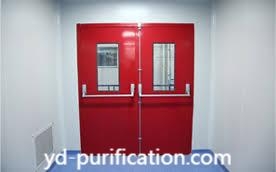
In industries where environmental stability defines operational success, Yuanda Cleanroom Doors play a quiet yet essential role. From pharmaceuticals to electronics, controlled spaces depend on precise separation, airflow coordination, and surface integrity. At the same time, yd-purification continues to support industrial clients seeking dependable cleanroom solutions that align with evolving facility standards. How can a single structural component influence both workflow and environmental consistency?
Controlled environments are designed to reduce airborne interference, manage pressure balance, and maintain surface hygiene. Entry systems must support these objectives without disrupting daily operations. Door structures are often the most frequently used interfaces between zones, which means material selection, structural design, and surface treatment all affect long-term performance. A poorly designed access system may compromise airflow patterns or introduce maintenance challenges that affect operational rhythm.
Material adaptability is one of the key considerations when selecting access solutions for controlled areas. Smooth surfaces support routine cleaning, while sealed edges help limit particle retention. In facilities where chemical resistance or humidity control matters, surface stability becomes equally important. These design principles contribute to a space that remains consistent throughout daily use cycles, supporting both people and processes without unnecessary adjustments.
Another major consideration is spatial coordination. Modern controlled environments are rarely static. Production lines expand, laboratories adjust layouts, and workflow paths evolve. Door systems that allow flexible integration help facilities adapt without structural disruption. Modular compatibility and installation precision allow teams to maintain continuity even during internal reconfiguration, supporting long-term operational planning.
Operational efficiency is also closely linked to movement flow. Entry points must allow smooth passage for personnel and equipment while maintaining separation between different functional zones. Well-designed door systems help guide movement intuitively, reducing hesitation and congestion. This subtle guidance supports safety awareness and process clarity without relying on excessive signage or supervision.
Maintenance planning is another factor often evaluated during facility design. Components that support straightforward inspection and surface care reduce downtime and simplify routine management. Durable finishes, stable framing, and precise alignment help ensure that doors remain functional throughout extended use periods. This reliability supports consistent environmental conditions and reduces unexpected interruptions.
In clean manufacturing and research environments, visual coordination also matters. A unified appearance supports professional presentation and reflects internal discipline. Door structures that align with wall systems and panels help create visual continuity across zones. This cohesive environment reinforces organizational standards while supporting visitor confidence and internal accountability.
As industries continue to refine environmental control requirements, access solutions must align with both present needs and future adjustments. Yd-purification focuses on structural compatibility and application adaptability, supporting facilities that value consistency and long-term planning. By integrating practical design principles with cleanroom standards, access systems contribute quietly to daily operational stability.
When evaluating Doors, decision-makers often look beyond immediate functionality. They consider how each component supports workflow logic, environmental separation, and maintenance planning over time. Product systems available at https://www.yd-purification.com/product/ demonstrate how Cleanroom Doors can support controlled environments while aligning with modern facility expectations.

 廣東話
廣東話